
Will Gadsby Peet
Strategic Director
Will helps our clients identify the most effective routes to sustainable commercial growth.
Learn how to build service pages that help AI search tools understand your offer, audience, outcomes and evidence, based on our energy sector research.
A good service page needs to do more than rank in Google. It needs to give AI search tools enough information to understand what you offer, who it is for, and why you should be recommended over someone else. Our research into 86 UK energy organisations points to four things to get right when it comes to AI search optimisation.
That sounds obvious, but it was one of the clearest findings from our AI Performance Analyser when we used it to assess AI visibility across 86 UK energy organisations.
Detailed, specific service pages were a recurring characteristic among the strongest examples we reviewed. Weaker pages left gaps, forcing AI search tools to piece together an explanation from whatever information they could find elsewhere.
For marketers, that makes your service pages the most important place to start.
First, AI search tools need to be able to access the page.
That means getting the technical SEO basics right: crawlability, page speed, structured data, and text that isn’t hidden away in formats AI platforms struggle to interpret, like PDFs or images.
This is the foundation. It isn’t the competitive advantage.
Our energy research found that technical accessibility was the strongest of the four areas we scored (49/100), but it had no meaningful relationship with AI visibility. In other words, getting through the front door doesn’t mean you’ll actually be shortlisted by AI search tools in response to relevant prompts.
We explore that gap in more detail in why good SEO doesn’t guarantee visibility in AI search.
Read more: How we measure what AI is saying about your organisation
Once AI search tools can read the page, they need to understand your services.
Your pages need to explain:
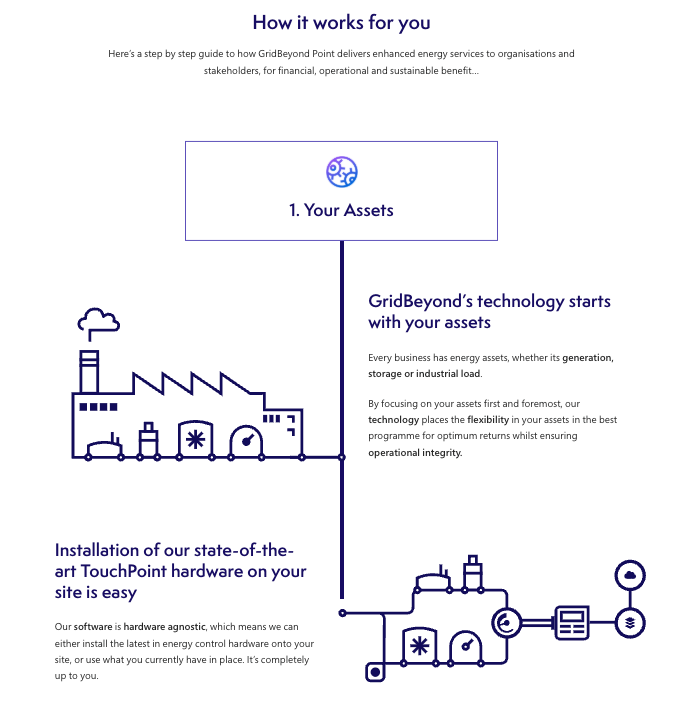
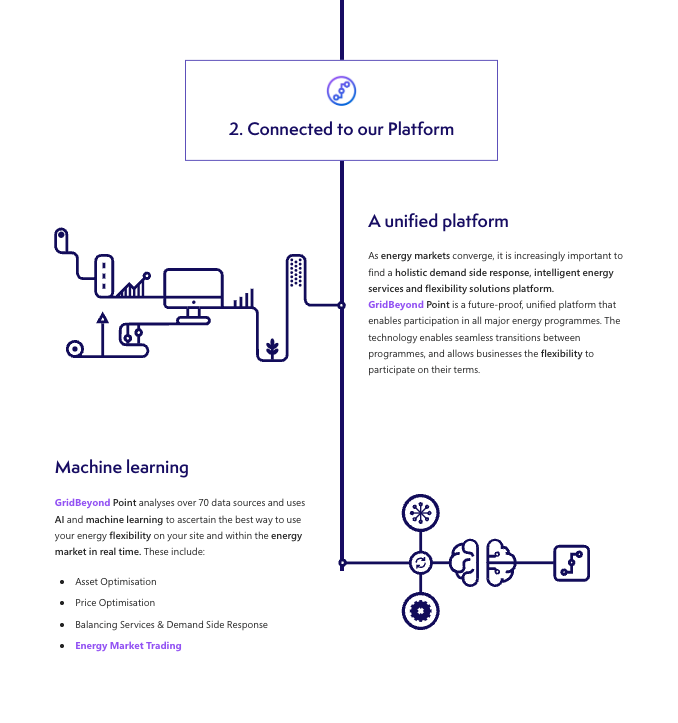
Write in the exact language your buyers use, not internal jargon. AI search tools match a buyer’s question to your page based on meaning, and the less translating they have to do, the more confidently they can put you forward.
If a fleet manager asks about “depot load management” and your page only mentions a proprietary brand name, you are forcing AI search tools to connect the dots themselves. Overcome the curse of knowledge by anchoring the page in the buyer’s problem and standard category terms first, then introduce your product as the solution.
In our research, GridBeyond did this particularly well. Its website connects technical services to business outcomes and breaks complex propositions into clear step-by-step instructions, giving AI search tools enough substance to explain the organisation confidently.
Clarity beats clever copy.
Clear, specific service content was also a recurring characteristic among the ten highest-scoring organisations in our study.
Read more: What Google’s latest AI search guidance really means for marketers
Understanding what you do is only half the job. If someone asks an AI search tool to recommend a provider, it needs a reason to choose you. In our research, AI platforms typically covered three or four organisations in detail when responding to a user prompt asking for a solution.
Give AI search tools evidence like:
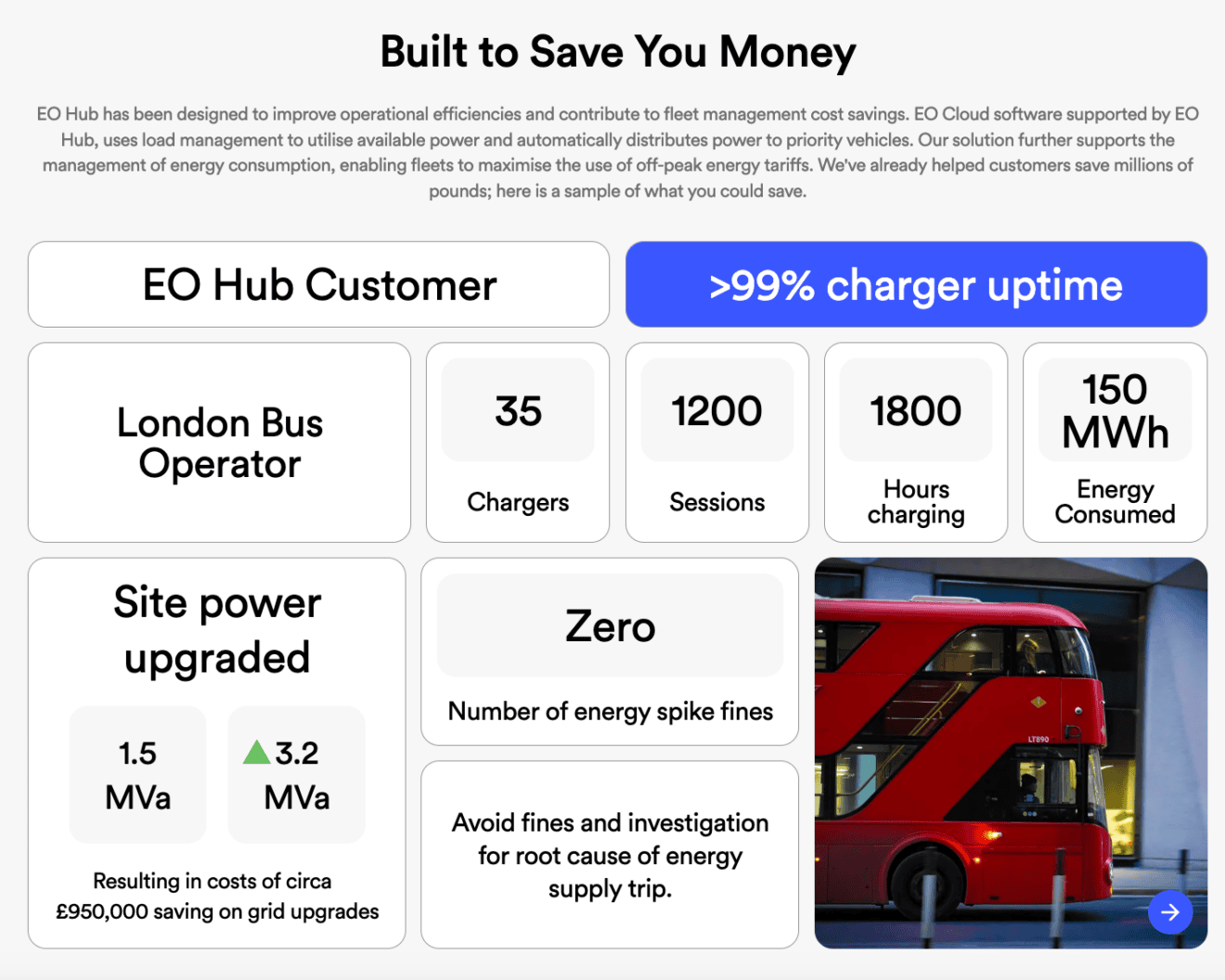
EO Charging’s Energy Management page is a good example. It explains how its EO Hub service manages available power and prioritises charging, then backs that proposition up with real customer data. That gives AI search tools more than a description of the service. It gives them measurable evidence of what EO has delivered, which provides a stronger basis for comparing the organisation with another provider.
Read more: Will AI search stop people visiting my website?
Your service page doesn’t exist in isolation.
AI platforms can compare what you say on your website with what they find across LinkedIn, press coverage, industry publications, reviews, and other third-party sources.
This is where AI search starts breaking down the old marketing silos. Your website, content, PR, social, and reputation all reinforce each other and need to tell the same story. This is where AI search tools get information about your organisation.
A flexibility provider and a charge point operator should not prove credibility or structure their content in the same way.
The framework stays the same, but the evidence, format, and emphasis will change by sector, audience, and buying decision.
That’s why AI-driven discovery needs more than a few tweaks to a service page. Your website, content, social presence, PR, and wider reputation all need to reinforce the same story.
Getting all of that working together is difficult, even with a strong internal team. That’s where an agency with a joined-up approach to digital marketing can help: setting the strategy, connecting the different parts of your marketing, and adding specialist support where you need it.
If you want to know where your own service pages stand, reach out about our AI Performance Analyser.
See how 86 UK energy organisations performed across AI visibility, technical accessibility, prompt performance, and authority, and where the biggest opportunities lie.
Download The state of AI visibility in the energy sector 2026 report.
Strategic Director
Will helps our clients identify the most effective routes to sustainable commercial growth.
View my other articles and opinion pieces below
We analysed 86 UK energy companies to see how ready they are for AI search. The average AI Readiness score was just 36 out of 100, and only one company cleared our benchmark of 70. The biggest issue wasn’t technical performance. Most websites could be accessed by AI platforms, but far fewer gave them enough clarity, evidence, and confidence to recommend the business.

Our research into AI visibility in the energy sector found that LinkedIn was the most cited third-party source in AI search answers, appearing in 15.3% of responses. However, organisations with stronger third-party authority were no more likely to appear in AI answers. External coverage helps AI search tools validate your story, but it can’t compensate for a website that doesn’t clearly explain who you are, what you do, and why you should be recommended.

On the Monday evening of London Climate Action Week, with London cooking under a record-breaking heatwave, the most sensible place in the city was underground. We brought a room full of marketers together from across climate tech, clean energy, and sustainability, in an 18th century port cellar, for an eco wine tasting. The wine was […]