
Ed Ricketts
Head of AI Search
Ed helps our clients support business growth by improving how they’re discovered, understood and recommended across AI search.

Learn how to audit what AI search understands about your organisation and keep your website, profiles, press coverage and other sources aligned.
AI search tools build their understanding of your organisation from your website, LinkedIn, press coverage, industry publications, government websites, reviews, and other credible sources. Our research into 86 UK energy organisations suggests that clear owned content and consistent third-party evidence give AI search tools a stronger information base from which to understand and represent an organisation.
When someone asks an AI platform about your organisation, it has several things to establish.
What do you sell? Who is it for? What problems do you solve? What evidence supports those claims? How do you compare with other providers?
Our research into 86 UK energy organisations shows where those answers can come from, and where marketers have the greatest opportunity to influence how often their organisation appears in relevant AI search answers and is recommended over competitors.
We used our AI Performance Analyser to assess organisations across four areas:
Each area is scored out of 100 possible points. Across the 86 organisations we analysed, Technical Accessibility averaged 49/100, while Visibility averaged just 23/100.
In other words, many websites were accessible to AI search tools, but far fewer gave them enough useful information to surface the organisation in relevant answers. That comes down to what AI search tools can actually learn once they reach the site. They need clear information about what you offer, who it is for, how it works, and what outcomes it delivers.
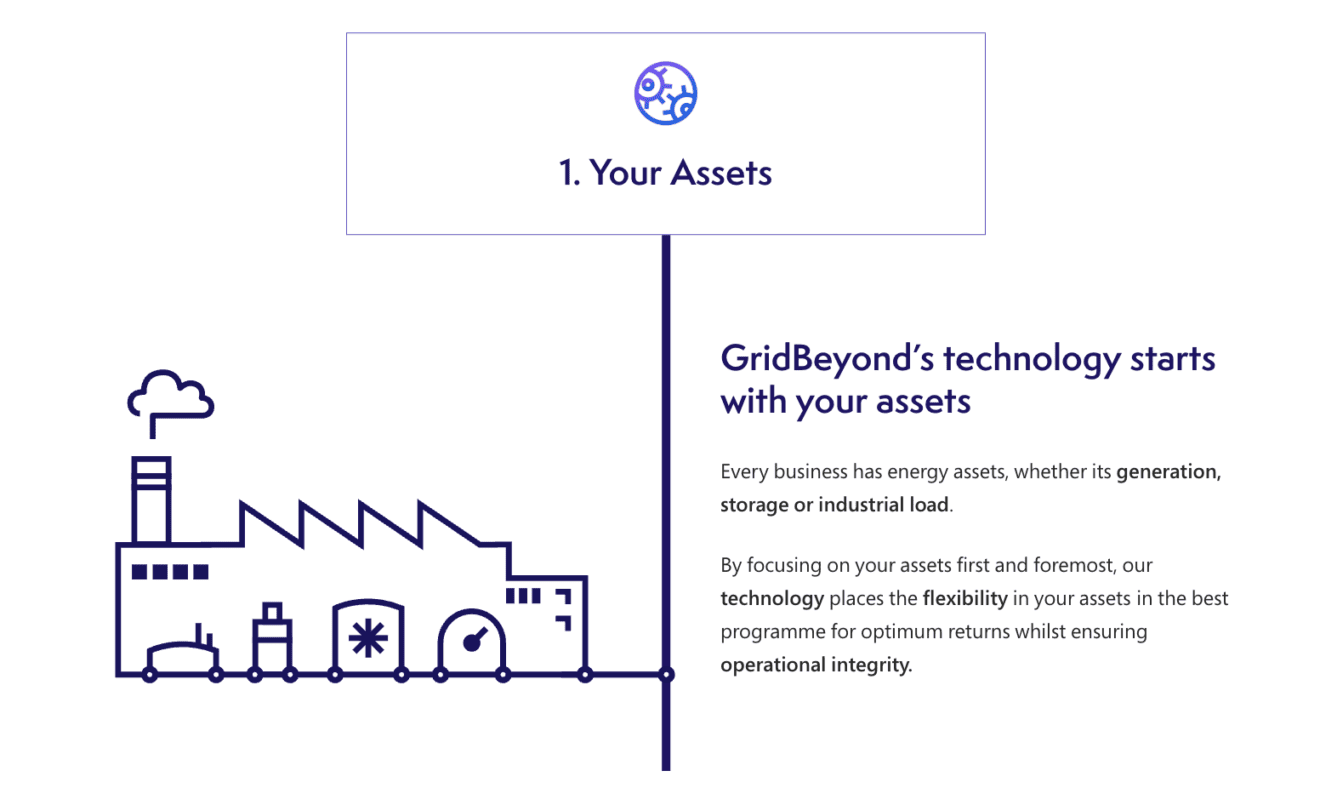
GridBeyond is a good example. It achieved the highest overall AI Readiness score in our study at 73/100, including a Visibility score of 80/100. Its technology page doesn’t just describe what the platform can do – it breaks down how it works step by step. That gives AI search tools a much clearer understanding of both the mechanics of the service and the outcomes it is designed to deliver.
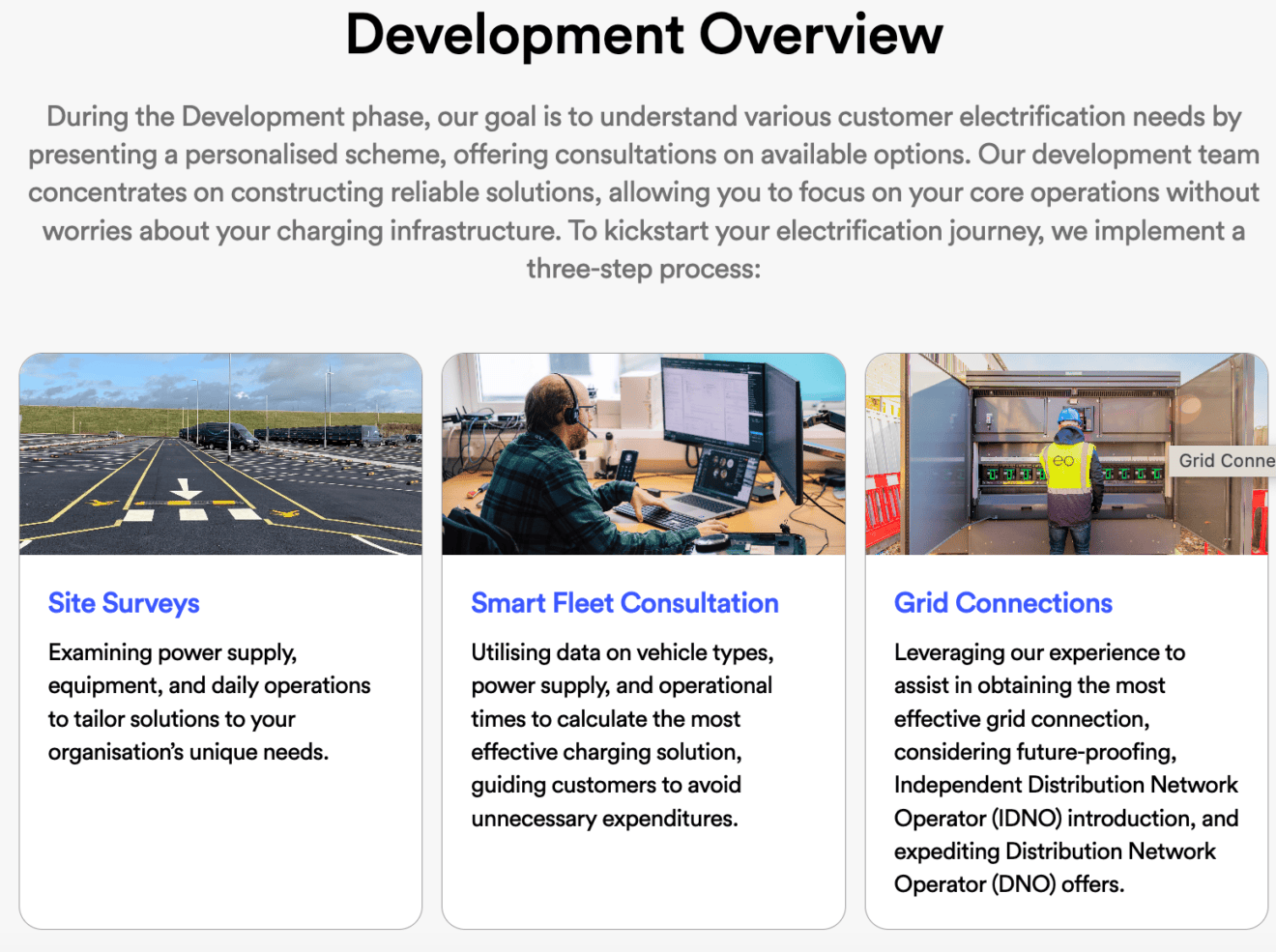
EO Charging scored 55/100 overall, but achieved a Visibility score of 60/100, well above the sector average. Its Development & Construction page shows the level of detail AI search can use to understand the offer. For example, it sets out a three-step process covering site surveys, smart fleet consultation, and grid connections, explaining what happens at each stage and why. That gives AI search clear information about who the service is for, the problems it addresses, and how EO delivers it.
Those details matter because they give AI search specific facts to use. A broad claim like “end-to-end energy solutions” gives it very little to work with. A page that explains the audience, service, process, and outcome gives it a much clearer picture of the business.
That is where you can influence what AI search learns from your website. Make the fundamentals explicit, and you give AI search a stronger basis for understanding your organisation and recognising when it is relevant to a buyer’s question.
We explore what that looks like at page level in our framework for building better service pages for AI search.
Your website gives AI search tools your own account of the business. They can then compare that with information from third-party sources to judge how well those claims are supported and shape their recommendations.
In our research, LinkedIn was the most frequently cited third-party source, appearing in 15.3% of AI search responses. Wikipedia, YouTube, and Reddit combined appeared in 15%, while government websites appeared in 6%.
Each source can add a different type of evidence:
That gives you another way to influence what AI search learns about the business. If your website says you specialise in grid flexibility, for example, relevant LinkedIn content, trade coverage, and project references can all support that same positioning.
Electron is a good example. Its website explains how ElectronConnect supports flexibility markets. SSEN then provides independent evidence of that in practice: during a two-week trial, it used ElectronConnect to procure short-notice flexibility during planned network works, delivering 507kW of flexibility across three participating assets.
Electron’s website tells AI search tools what the platform is designed to do. SSEN’s account shows it being used to do exactly that. Together, those sources give AI search tools a clearer, better-supported picture of Electron’s role in flexibility markets and the situations where its technology is relevant.
You don’t need to appear everywhere. You just need the sources AI search is likely to encounter to give it a clear, credible, and consistent picture of what your organisation does.
Read more: What Google’s latest AI search guidance really means for marketers
The average Authority score across the 86 organisations was 39 out of 100.
We found no meaningful relationship between Authority and Visibility. In other words, an organisation with more external credibility signals was not automatically more likely to appear in AI search answers.
That changes how marketers should think about PR, social, and other external activity. The objective is not to accumulate mentions for the sake of it. A relevant trade publication confirming your expertise in battery optimisation, for example, is more useful to your overall story than unrelated coverage that gives AI search no additional understanding of what you do.
In short, external sources are strongest when they corroborate a clear proposition rather than having to explain the proposition themselves.
A problem arises when different sources say different things about your organisation.
Imagine your website positions the business around enterprise energy infrastructure. Your leadership team, however, is still discussing an older SME proposition on LinkedIn, while prominent search results describe services you stopped offering two years ago.
AI search has to reconcile those versions of your story when considering how to represent your organisation.
When your own pages and prominent third-party sources agree, AI search tools have fewer conflicting signals to reconcile. When they conflict, or the available record is thin, the model has to decide which information to rely on.
That makes maintaining your wider digital footprint part of brand management. Old biographies, outdated service descriptions, inconsistent terminology, and conflicting positioning can all affect the evidence available to AI search tools.
Read more: Will AI search stop people visiting my website?
A useful starting point is to review the specific sources that shape your digital footprint:
Then test how AI platforms are using that information by measuring how your organisation appears across AI search.
Look at the questions your customers are likely to ask, see whether your organisation appears in the answers, and check how accurately it is described. That shows you whether the information available online is helping AI search understand your business in the way you intended.
Traditional SEO reporting won’t show you all of this.
Our AI Performance Analyser measures where your organisation appears across relevant prompts, how it is described, and where its representation is weak or inconsistent.
You can’t control every answer an AI platform produces. You can improve the evidence it has available and track whether that changes how your organisation is represented.
See the full findings from our analysis of 86 UK energy organisations, including where AI search visibility is strongest, where organisations are falling behind, and what marketers can do next.
Download The state of AI visibility in the energy sector 2026 report.
Head of AI Search
Ed helps our clients support business growth by improving how they’re discovered, understood and recommended across AI search.
View my other articles and opinion pieces below
Ask ChatGPT, Gemini, or Google’s AI Overviews to explain your organisation, and yes, you’ll get an answer. But ask again, you’ll get a different one. That’s the number one challenge when measuring any organisation’s visibility in AI search. Your organisation’s presence in AI answers can be observed, but it’s not necessarily consistent. AI doesn’t behave […]