Abby Webb
Strategic Director
Abby head up our SEO campaigns, with a strong background in copywriting, content and paid search marketing campaigns.

Learn how energy companies can use digital marketing to reach diverse audiences, increase visibility, and drive more conversions.
The energy sector includes a broad range of organisations, from renewable energy developers and energy infrastructure providers to technology businesses, utilities and consumer-facing suppliers. Each operates in a complex market, often with multiple audiences, long buying journeys and products that can be difficult to explain.
Effective energy marketing therefore requires more than promoting individual products or services. Energy companies need a clear digital marketing strategy that helps the right audiences discover them, understand their value and develop enough confidence to take the next step.
Some energy companies need to communicate directly with consumers. Others, such as energy infrastructure and metering businesses, primarily need to reach commercial buyers, introducers, utilities or other organisations. Many need to address several audiences at once, each with different levels of technical knowledge, urgency and awareness.
Your digital marketing strategy will depend on understanding:
Putting yourself in your audiences’ position is not always easy when you work closely with complex energy products and services. However, several practical principles can help energy companies build visibility, communicate more clearly and generate relevant enquiries online.
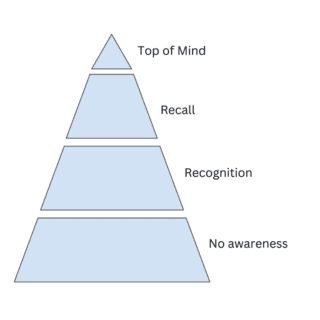
To communicate effectively with your audience, you need to understand their level of awareness. Here’s an example:
Imagine your organisation provides half-hourly meters to businesses. These allow them to track their energy use more accurately, which in turn allows them to use their energy more effectively, saving them money in the long run.
There’s only one problem.
Your audience for this product – business owners – might not know what a half-hourly meter is. So, while your website might be appearing in Google Search for queries like, “what is a half-hourly meter,” you’re missing out on connecting with a huge part of your potential audience who doesn’t know that you have the solution to their problem yet.
That problem is the need to reduce energy consumption, save money, and achieve ambitious Net Zero targets. You need to be able to raise awareness of your service among people asking broader questions like “how to reach Net Zero”, “save money on energy” or “become more energy efficient”.
In other words, you need to start raising awareness among people who are aware of the problem they face, but not the solution you provide.
This is what we call “See Stage” or “awareness” marketing activity, and it’s vital to your digital marketing activity’s success, especially in a sector like energy where brand loyalty is low.
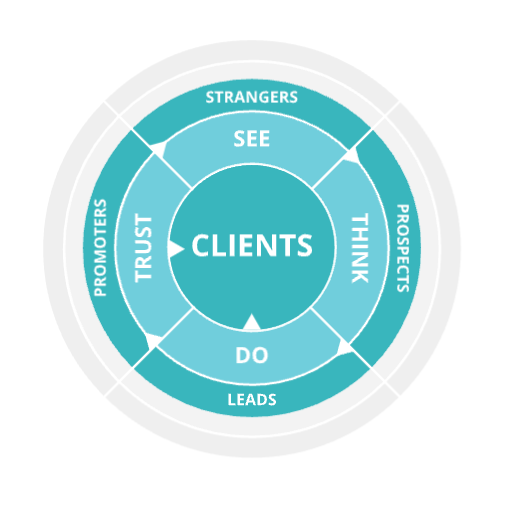
This is particularly important in B2B energy marketing, where buying decisions can involve several stakeholders and take place over an extended period. A technical user, procurement team, sustainability lead and finance director may all evaluate the same service from different perspectives.
Your website and wider marketing activity need to answer each stakeholder’s questions without assuming they all have the same knowledge or priorities.
Customers no longer follow one predictable digital journey.
They may:
An effective digital marketing strategy needs to account for all three behaviours.
Search activity captures audiences who are actively looking for information or a solution. This can include:
Social and editorial activity can introduce your organisation before a buyer begins an active search. It can include:
AI platforms are increasingly becoming another research surface. Buyers can ask them to explain energy terminology, compare approaches or recommend suppliers.
For your organisation to appear accurately, AI systems need to be able to find clear, consistent and credible information about:
This does not replace traditional SEO. Strong websites, useful content, external authority and clear brand information support visibility across both search engines and AI platforms.
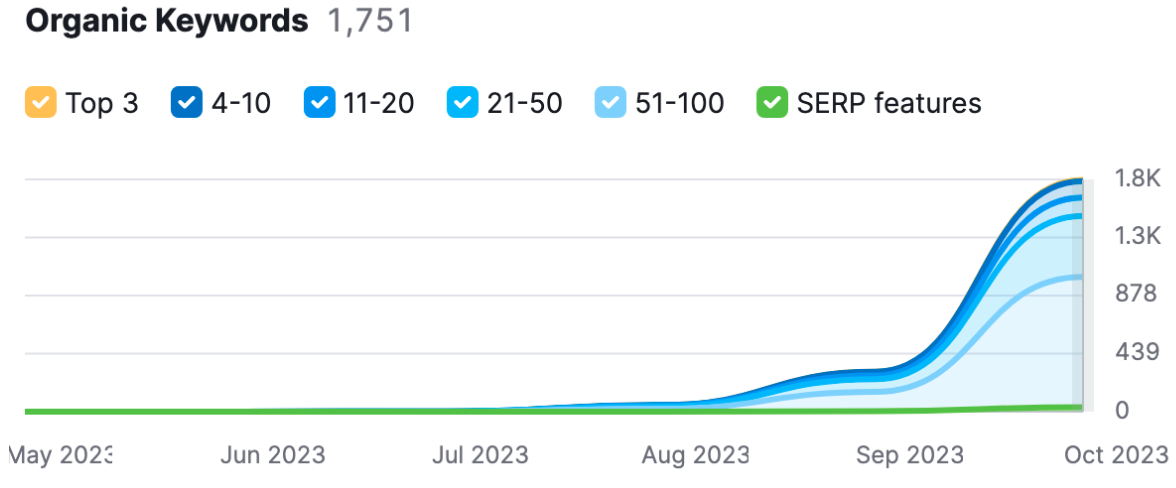
Creating content for your site is a great way to increase its visibility on Organic Search and raise awareness of your brand. For example, you can develop an “Insights” section of your website which hosts articles written to address your audiences’ major questions and concerns.
To stick to our half-hourly meter example, this content could include topics like:
This kind of content focuses on the challenges your audience will understand even at a low level of awareness of your products and services. They’re an opportunity to increase the visibility of your website in Google Search and awareness of your solutions. This is incredibly important in the long-term, and very often overlooked.
Naturally, some of your audience groups will have a more in-depth understanding than others, but err on the side of caution. Adding FAQs to your website’s services pages can help get your audience up to speed and also drive target from common Google Search queries to your website.
If your business operates electric vehicle chargers, for example, then an FAQ on your EV charger page which explains which vehicles can use which voltage is going to be both useful to consumers and directly connects to Google Search queries like “which chargers can my EV use?”
However, organic energy marketing should not rely solely on publishing blog articles. A strong search presence needs a connected information structure that may include:
Each page should have a defined purpose and support a specific stage of the buyer journey.
For example, an article explaining how businesses can reduce energy costs may reach an early-stage audience. A half-hourly metering service page can then explain the solution, while a case study provides evidence of the outcome.
SEO for energy companies involves making the organisation’s website easier for search engines and users to understand.
This includes three connected areas.
Your website needs to be accessible, fast and straightforward for search engines to crawl. Important considerations include:
Technical problems can limit the performance of otherwise strong content.
Your pages should reflect the terminology your audience uses, not only internal product names or industry language.
Research can help identify:
The aim is not to repeat keywords, queries or phrases unnaturally. It is to make sure each page clearly addresses a relevant topic and satisfies the likely purpose of the search.
Search engines also need evidence that your organisation is a credible source.
This can be strengthened through:
Energy is a technically complex and commercially significant sector. Unsupported claims and generic content are unlikely to create the same confidence as material grounded in genuine expertise and evidence.
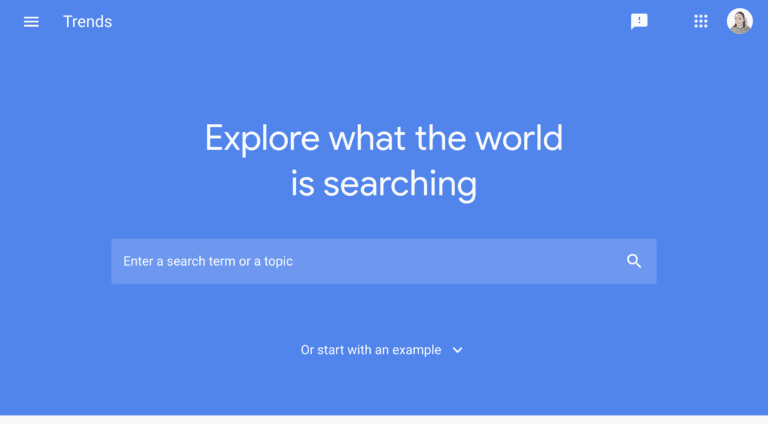
To populate your site with useful content, whether it’s articles in an Insights section or FAQs, you need to understand exactly what questions your audience is asking. Here are some useful tools to help you do just that:
We’ve already talked about how your different audience groups are likely to have different levels of awareness and understanding of your products and services. But how do you actually separate them out?
Making sure that your website is very easy to navigate, and that your different products and services are clearly sign-posted to visitors on the homepage, can make all the difference. For example, you can create distinct sections or tabs on your homepage tailored for different audience segments – such as “For Homeowners,” “For Businesses,” and “For Drivers” (assuming, of course, that your business caters to these groups). This allows users to quickly find the information most relevant to them without feeling overwhelmed.
You can also use targeted landing pages that address the specific needs and questions of each audience segment. For instance, a landing page for homeowners interested in solar panels should address common questions and concerns about residential solar energy, while a page for business owners might focus on the financial and environmental benefits of large-scale renewable energy solutions.
If you’re running Paid Search activity, your Google Ads can lead to these different landing pages depending on which audience each ad is targeting.
Your sales, account and customer service teams can provide some of the most useful content ideas.
Look for:
These are strong candidates for website content because they are grounded in genuine buyer needs.
We’ve already talked about how your different audience groups are likely to have different levels of awareness and understanding of your products and services. But how do you actually separate them out?
Making sure that your website is very easy to navigate, and that your different products and services are clearly sign-posted to visitors on the homepage, can make all the difference. For example, you can create distinct sections or tabs on your homepage tailored for different audience segments – such as “For Homeowners,” “For Businesses,” and “For Drivers” (assuming, of course, that your business caters to these groups). This allows users to quickly find the information most relevant to them without feeling overwhelmed.
You can also use targeted landing pages that address the specific needs and questions of each audience segment. For instance, a landing page for homeowners interested in solar panels should address common questions and concerns about residential solar energy, while a page for business owners might focus on the financial and environmental benefits of large-scale renewable energy solutions.
If you’re running Paid Search activity, your Google Ads can lead to these different landing pages depending on which audience each ad is targeting.
You can also assess the questions users may ask AI platforms about your sector, services and competitors.
For example:
Reviewing how AI platforms answer these questions can reveal whether your organisation is visible, how it is described and which sources are influencing the response. your different audiences’ most relevant and timely questions, enhancing your website’s visibility and providing real value to your audience.
Energy buyers are beginning to use AI platforms alongside search engines, websites and industry sources.
This introduces a further question for marketing teams:
Can AI systems accurately find, understand and recommend our organisation?
We assessed 86 UK energy organisations to understand how well AI platforms could find, interpret and recommend them.
The analysis found an average AI readiness score of 36 out of 100, with only one organisation reaching true AI readiness.
This suggests that being mentioned by AI is not the same as being clearly understood or actively recommended.
Factors that can influence AI discoverability include:
Energy companies should therefore treat AI discoverability as an extension of wider digital visibility, rather than an isolated channel.
Explore the State of AI Discoverability report
Raising awareness of your energy company’s services, connecting with your audience, and ultimately driving conversions isn’t easy. But with a robust digital marketing strategy that understands your business goals, your audience groups, and the channels and marketing activity best suited to meet them, you will see significant improvements in engagement and visibility.
A successful energy marketing strategy needs to connect:
Implementing a well-planned strategy allows you to deliver relevant information to your audience, whether they are consumers or other businesses, and guide them through their decision-making process. By mastering the art of targeted digital marketing, you’ll not only raise awareness of your brand’s strengths but but build up your audience’s trust in the long-term, setting the stage for lasting success.
Strategic Director
Abby head up our SEO campaigns, with a strong background in copywriting, content and paid search marketing campaigns.
View my other articles and opinion pieces below
The search landscape is shifting quickly, with features, user behaviour and industry commentary updating almost every day. Google is obviously central to that shift towards AI search, as it continues encouraging users towards generative AI experiences through features like AI Overviews and AI Mode. That makes its “Guide to Optimising for Generative AI Features on […]
AI content policies are starting to show up in more places, especially among publishers, broadcasters and other editorial-led organisations. With AI playing a much larger role in how a lot of content gets produced, these policies are no surprise. The question I’m asking isn’t whether organisations are using AI in content creation. Most already are, […]

Google’s AI search demands higher standards for YMYL content. Learn how to keep your financial, legal or health advice visible, trusted and compliant.

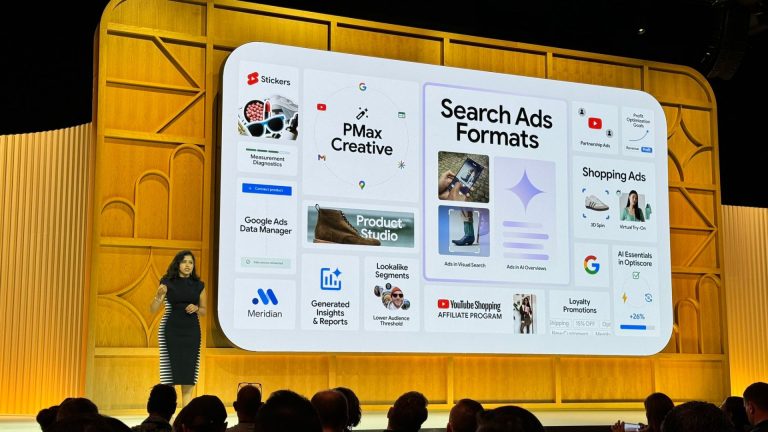
At Google Marketing Live 2025, the focus was clear: AI is already changing the way people search, and as a result, it’s changing what brands need to do to show up in search results. Here’s what you need to know – and what it means for your marketing.